Showing posts with label Book. Show all posts

Friday, September 3, 2010

Gone Googley...

I started this blog back in August of 2008 because, as I noted at the time, "I found myself without a forum to comment on general trends in digital marketing and media." Sure, I had some 15-ish active blogs but they were all specific to some niche in the industry or some quirk of my personality.

Today, I'm fortunate to have found a forum and following through my book, Everything I Know about Marketing I Learned from Google, and the Googley Lessons blog. Going forward, I'll be putting Digital Sea Change on hold indefinitely and consolidating all my digital marketing blogging on my book website.

I'll leave this blog intact so that you can peruse my posts over the past couple years -- including those I pointed to directly in the book -- but I will not be adding any new content. If this is the first time you're visiting my blog and just want the highlights, please see my "Favorite Posts of All-Time" on the right rail.

I hope you'll join me at GoogleyLessons.com/blog as I continue the blue ocean pursuit. After all, it's only getting Googlier!

Wednesday, August 11, 2010

Google eBook

Here's a Google eBook I created with McGraw-Hill to showcase each of the 20 Googley Lessons from my book. Hopefully this will give you a good feel for my content and tone.

Note: the actual book contains much more depth on Google's approach to marketing along with mini case-studies of other companies demonstrating these principles and exercises for readers to apply these lessons to their businesses, so don't think you can just read this eBook and be done with it!!


Google Rap Video

Here's the video trailer for my new Google book. If you like the last 50 seconds, be sure to check out the outtakes at GoogleyLessons.com/Videos and keep an eye out for the Googley Lessons Blog Tour Aug. 30 - Sept. 10th which will have me "appearing" at some 30-odd blogs -- many in video format complete with customized raps.

Wednesday, June 16, 2010

Who's Ready to Get Googley?!?


Image Source

Gotta love that old Snickers ad. "Hey, that's great but who are the Chefs?!?"

Yesterday saw the new website launch for my Google book, Everything I Know about Marketing I Learned from Google, at GoogleyLessons.com.

I'm very pleased with how it came out and must tip my hat again to the good folks at Elevate Studios for the amazing work.

The site is full of content including executive summaries of each chapter, the full text of nearly every interview I conducted while researching the book, as well as the complete book introduction. There's also a blog where I plan to share behind-the-scenes tidbits as well as keep everyone updated on news and info related to the book and its subjects.

One of my main goals for the site is to make reading the book a more interactive experience. Throughout the book I included URLs for people to click on e-readers and/or type in to their browsers to get more context for a particular topic. And I set up specific URLs for each chapter for readers to share thoughts and exchange ideas with others.

My hope is that the book will become much more than the paper -- and, as the case may be, digital ink -- it's printed on. As noted in Chapter 17, "Show of Your Assets," it's always a best practice to extend the shelf life of your products through digital asset creation and distribution. This website is one small way I'm looking to practice what I preach. Other tactics include a promotional video I'm shooting tomorrow along with a blog tour around the book release date (which is set for 8/27, btw) -- both of which were concepted and being executed by my publisher, McGraw-Hill.

When you have a few minutes -- or hours -- to spare, please check out the Googley Lessons website and, if you haven't already, pre-order the book and engage in the conversation.

And, if you like the shirt below better than the one up above, feel free to pick one up -- choose from 20 color combinations! -- through my pals at KosherHam.com.


Remember, Googley is as Googley does. And who doesn't want to get Googley every now and then?!?

Thursday, May 6, 2010

Yahoo Chides Google for Keeping It Simple. Who's Stupid?


I came across this video in my Facebook news feed thanks to my friend who runs the self-titled "Geoff DeMars Internet Marketing News" page on FB.

The crux of this video and Yahoo's new campaign can be summed up in these 2 lines...

"There's nothing to look at but a box and a button... you come to this place so you can leave."

"At Yahoo, we've got another idea... a place you want to stay."

In his post, Geoff linked to this piece on Search Engine Land in which Yahoo's approach is called "misguided and off the mark" by Greg Sterling and "stunningly stupid" by Danny Sullivan.

For what it's worth, I see merits and demerits to this strategy...

Merit: Yahoo realizes it can't compete with Google and is trying to position itself as an entirely different resource.

Demerit: If Yahoo really realized it couldn't compete in search, it wouldn't repeatedly play up its search capabilities in the voiceover.

The bottom line, though, is that there's nothing Yahoo can do about the fact that most advertisers don't want to reach people on a place that "people want to stay."

Rather, as I discuss in Chapter 4 of my book, "Everything I Know about Marketing I Learned from Google," advertisers want to reach people when they're in a commercial mindset aka "buy mode." More often than not, that type of intent is displayed by going to a place to find what you're looking for and leave. Hence why Google did $6.7 billion in revenue in Q1 compared to Yahoo's $1.6 billion.

I cover the whole "should I stay or should I go" thread in Chapter 3 of my book and the copy is so darn close to the script in this Yahoo ad I thought I'd better share it now before anyone reads the book in September when it's released and thinks my POV was skewed by the Yahoo campaign.

So here's an excerpt from Chapter 3 -- the first 797 of 3647 words in the chapter, to be precise. Note, this is unedited copy from my original manuscript and, outside McGraw-Hill, no-one else has seen it. Would love any and all feedback.

Chapter 3: Keep It Simple, Stupid

What are you supposed to do on Google.com?

Easy, right? Search.

The big search box surrounded by white space beckons you to do one thing and one thing only.

Search.

When you first told someone else about Google, did you have to explain how to use it? Nope.

How do you think Google became a verb? Simple.

There’s very little ambiguity. Google means search.

Today, this seems like a no-brainer. But, in 1998 this was a novel concept. At that time, the most popular websites more closely resembled newspapers, covering every inch of the page with content and ads.

What you were supposed to do on these sites was less clear. Read articles. Look at ads. Communicate with friends. There was one common goal, though. These websites wanted you to stay -- maybe not on that particular page but definitely on that site.

Contrast that with Google. Google doesn’t want you to stay on its site. It wants you to leave.
And what better way to hammer that idea home that to put a big box in the middle of the page with nothing else around it.

Fade to White

Today Google could command millions of dollars for ads on its homepage. But that would distract you from the task at hand. Searching.

In fact, Google recently went a couple steps further. First, in September 2009, it made the search box bigger. Then, a few months later, it removed everything but the box, logo, and search buttons, only fading in the other menu items, links, and footer upon movement of the mouse.

In a blog post, Marrisa Mayer, Google’s VP of Search Products and User Experience, explained the change as follows…

“For the vast majority of people who come to the Google homepage, they are coming in order to search, and this clean, minimalist approach gives them just what they are looking for first and foremost. For those users who are interested in using a different application like Gmail, Google Image Search or our advertising programs, the additional links on the homepage only reveal themselves when the user moves the mouse. Since most users who are interested in clicking over to a different application generally do move the mouse when they arrive, the ‘fade in’ is an elegant solution that provides options to those who want them, but removes distractions for the user intent on searching.”

Of course, what happens after you search is a different story. In the early days, Google results pages were pristine lists of blue links. Today, they resemble almost every other page on the Web replete with images, widgets, and ads.

This layout is quite calculated, however. Once you’ve already searched, Google doesn’t want you to search again. It wants you to click. On whatever seems most relevant to you at the time. Organic listing. Image. Map. Ad. It doesn’t matter. Just click. Hopefully you’ll have found what you wanted and then come back again to search.

Everything about the way Google lays out its pages screams what it wants you to do. Search. Then click. And repeat.

“Don’t over think it. Sometimes simple creates the best experience.” -- Sean Cheyney, VP,
Marketing & Business Development, AccuQuote @scheyney

Easy Does It

On its corporate website, Google lays out its design principles. One of them speaks to the power of simplicity.

“Simplicity fuels many elements of good design, including ease of use, speed, visual appeal, and accessibility. But simplicity starts with the design of a product's fundamental functions. Google doesn't set out to create feature-rich products; our best designs include only the features that people need to accomplish their goals. Ideally, even products that require large feature sets and complex visual designs appear to be simple as well as powerful. Google teams think twice before sacrificing simplicity in pursuit of a less important feature. Our hope is to evolve products in new directions instead of just adding more features.”

In June of 2000, Google stuck a deal with Yahoo! to power its search results. But, despite returning the exact same results, more and more people flocked directly to Google.com when they wanted to find another website. Why? Simple. Google meant search. Yahoo! meant stay.

As Kenneth Fadner, Chairman and Publisher of MediaPost and one of the founders of Adweek, observed, “Yahoo's search was always buried inside its cluttered portal page. When people thought "search" they thought about Google, even while on the Yahoo page, where they could also search using Google. It was not the promise of a better result that moved them, it was the inability of people to hold multiple thoughts in their heads at the same time that made them think: ‘If I want to search I need to go to Google.’"

It was that simple.

Tuesday, April 13, 2010

"Final" Book Stats

Image Source

A couple weeks ago, I shared the latest numbers from my book manuscript. On 3/31 -- well, technically it was 12:08 on 4/1 -- I turned in my "final" manuscript to my publisher. Thought I'd share one last recap to let everyone know where I landed.

345 pages
3,052 paragraphs
7,232 lines
85,729 words
434,572 characters (no spaces)
518, 564 characters (with spaces)

If you do the math here, you'll see that almost half of my paragraphs are just 1 line. The goal is to make this book a quick read. It's not intended to be a cover-to-cover endeavor. Rather each chapter stands alone. With 21 chapters and an Introduction, each one averages out at 15-16 pages. If it took you longer than 30 minutes to read each chapter, I'd be surprised. Now, in each chapter, I tried to include an exercise for the reader to apply the Googley Lesson to his/her business. So the goal is certainly to have you think about each chapter for more than 30 minutes but it shouldn't take you much more than that to get through the copy itself.

Currently, the manuscript is in the very capable hands of my editor at McGraw-Hill. From there it goes to a development editor and a copyeditor. At that point, I'll have a chance to review their edits and make any last ones of my own. Then it's off to layout and production for an 8/20 release!

For now, it's back to more regular posting here and on the Connectual blog -- not to mention the other blogs I've been neglecting over the past 3-4 months -- as I still have the writing itch and plenty more time to spend scratching!


Sunday, March 28, 2010

Who's Counting?

Image Source

As stated in my previous Search Insider column -- What Assorted Marketing All-Stars Learned From Google -- the goal for my last installment was to catch the Duggars.

Last week's column -- What 19 Marketers Learned From Google -- squared me up with them, parents and grand-children excluded. Not sure how Michelle did it. My interviews each took only 30-40 minutes, not weeks!

Won't spend much time previewing or pontificating here. My manuscript deadline is 3/31 so it's crunch-time. And, being the glutton for punishment I am, I decided last week to add a 21st chapter titled, "Future-proofing" to discuss what's coming in the next 10-ish years for Google, and marketing in general, along with some tips to help readers prepare.

In my last blog post -- Got It Covered -- I shared some stats on word-count and such in addition to the cover art. Here are the updated figured -- again, pending a few last holes to fill and all the publisher edits yet to come...

Pages: 335
Words: 83,233
Characters (no spaces): 415,942
Characters (with spaces): 497,517
Paragraphs: 2,907
Lines: 6,935

And here's the blurb from my column...

What 19 Marketers Learned From Google

This is the sixth and final column in a series I've been publishing in MediaPost featuring excerpts of interviews I've conducted while writing my book, "Everything I Know About Marketing I Learned From Google." Today, I'll share 140-character-or-less responses from 19 marketing gurus regarding the most important thing they learned from Google.
» 1 Comments

Starting next week I get back to regular posting and bylines -- which means more often and less book-y!

Thursday, March 11, 2010

Got It Covered

Everything I Know About Marketing I Learned From GoogleVery excited to share the cover art for my book. This was created by McGraw-Hill and has some extra white space for glowing endorsements. :)

As far as the manuscript goes, today I cranked out the 20th and last chapter. I'm not done quite yet as there are a few gaps in each chapter that still need to be filled with research, interviews, etc. But, for the most part, the content is complete!

I'm very proud of what I've put together. I think it will make a very interesting, informative, entertaining, and provocative read. I've been very humbled by the support I've received from friends, family, colleagues, blog/byline readers, etc.

And I'm very fortunate to have been granted time and consideration from some 100+ industry luminaries who all participated in Q&A with me to help me prepare the manuscript. Excerpts of those interviews have been running in my Search Insider column and I plan to share more on my soon-to-be newly-designed book site, GoogleyLessons.com, which is scheduled to launch in April or May.

I'm also grateful to the good folks at Elevate Studios for letting me bunker-down in their offices the past few months where I can write in peace and especially for putting up with my machine-gun typing and frantic pacing.

OK, that's enough thanking. Gotta save something for the acknowledgements and dedication!

The book itself will be released August 20-ish but is now available for pre-sale on Amazon, Barnes and Noble, and Borders. I trust you'll find it's the best $17.79, $18.18, or $26.95 you've ever spent!

Here are some quick stats on what I've assembled. (Note: as mentioned above, I still have to plug in some holes and my editors have yet to work their magic. In all likelihood, these figures will get trimmed down quite a bit.)

Pages: 303
Words: 75,571
Characters (no spaces): 375,601
Characters (with spaces): 449,650
Paragraphs: 2,645
Lines: 6,286

(Yes, I've got it saved and backed up in triplicate!)

Look forward to putting this puppy to bed and getting back to biz and blogging! Thanks for your interest and, again, your support!


Wednesday, March 10, 2010

Kickin' It with the Marketing All-Stars

Chuck Taylor All StarsImage Source

In today's Search Insider column I culled my book interviews to catch some quick commentary from a collection of colorful characters. This is my second-to-last column before I come out of hiding at the end of the month and resume original writing.

Over the next three weeks though, I'm looking at a wedding in NY, conference in SF, week vacation in Cancun, and, oh yeah, a book deadline of 3/31 for McGraw-Hill! As I told my colleague, Glenn Fishback of Adify, yesterday, I only know one speed. Giddyup!

What Assorted Marketing All-Stars Learned From Google

This is the fifth in a series of columns I'm publishing in MediaPost featuring excerpts of interviews I've conducted while writing my book, "Everything I Know About Marketing I Learned From Google," Previous installments included a double feature with Paul Gunning and John Battelle. Like the Octomom or the Gosselins, there's no turning back after your first set of multiples -- so, today, I'll offer up 11 marketing all-stars weighing in on the same theme: What makes Google such a unique company? Why has it been so successful?
» 1 Comments

Wednesday, February 24, 2010

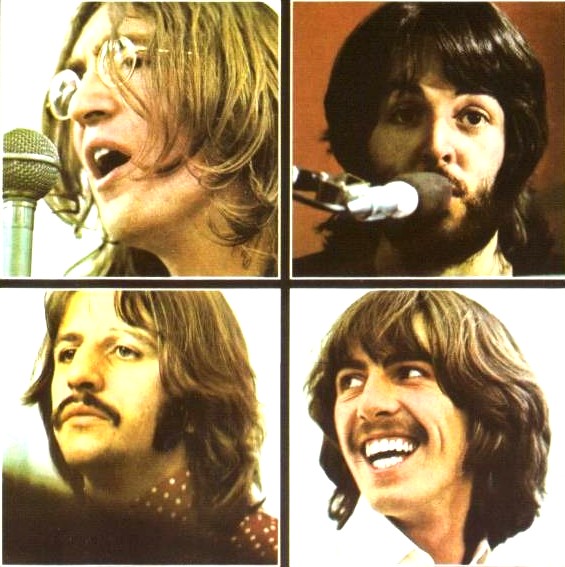
Sound Check with Paul and John; Where's George and Ringo?


Original Image Sources

Today's Search Insider column is a double-feature with sound-bytes from 2 heavy hitters in the space -- Paul Gunning, CEO of Tribal DDB Worldwide and John Battelle, CEO of Federated Media Publishing.

I've been very fortunate to have the support of many influential and insightful industry figures throughout the process of writing my book. I've conducted over 50 interviews to date with another 50+ in the works. It's been challenging to coordinate schedules much less take copious notes and weave them into the running manuscript.

That said, it's been well worth it as the end product will be much more powerful than anything I could've written in a silo. And, to top it off, I've been able to re-purpose the material into some fun Search Insider columns.

Here's the blurb from today's piece...

What Paul Gunning and John Battelle Learned From Google

This is the fourth in a series of columns I'm publishing in MediaPost featuring interviews I've conducted while writing my book, "Everything I Know About Marketing I Learned From Google." Today is a 2-for-1 special with Paul Gunning and John Battelle. Gunning is CEO at Tribal DDB Worldwide. Battelle is CEO of Federated Media (FM) Publishing, and author of "The Search," a book that stands the test of time as the defining narrative on the rise of Google and the importance of search. So, what did these captains of industry learn from Google? Read on...

Tuesday, February 23, 2010

Book Preview

Book Preview in TechJournal South


Yesterday, the TechJournal South posted this brief preview of my book. In it, I share some context around 5 of my 20 Googley Lessons.

FYI, I've now completed 12 chapters totaling 184 pages and 45,00+ words. Hoping to have the first 15 chapters done by the end of the week. Giddyup!

Stay tuned for tomorrow's Search Insider column, which will feature interviews with Paul Gunning of Tribal DDB and John Battelle of FM Publishing.

Thursday, February 11, 2010

We're Off to See the Wizard, the Googley Wizard of Biz

Image Source (Magic Google 8-ball mine)

In yesterday's Search Insider column, I ran my interview with Scott Hagedorn and teased him up as the "wizard of biz." Now you can see why.

Here's the blurb...


What Scott Hagedorn Learned From Google

Today, Scott Hagedorn sifts through the sizzle and the steak. Scott is the U.S. CEO of PHD, a global media network under the Omnicom Media Group umbrella. Scott is a digital guy at heart with roles as U.S. Director of Digital at OMD and Chief Interactive Officer at RAPP on his resume. But, above all, he's a self-professed geek when it comes to data, analytics, and technology. In fact, he's been known to bust out 4-D factorial models on spec in new-business pitches. So, what did the wizard of biz learn from Google? Read on...

Saturday, February 6, 2010

Throwing the Book at 'Em

Image Source

Just a quick update on the progress of my book -- aka the reason my blogging has been so light.

On Monday, I turned in chapters 1 thru 10 along with the introduction. The manuscript checked in at 37,158 words -- the equivalent of roughly 150 pages. In all, I've planned for 20 chapters -- one for each Googley Lesson -- so I'm half-way there!

By the time this sucker is edited down, we'll probably be looking at a lean, mean 250 pages which is a good fighting weight for this project -- substantial enough to include a host of case studies and practical takeaways but svelte enough to be a quick read with punchy copy and quick hits throughout.

I'm in the process of redesigning my book website in tandem with the dream team at Elevate Studios. We're looking at a 4/1 launch date for the website which just happens to be one day after my full manuscript is due to McGraw-Hill.

On the new site, I'll share many of the interviews I've conducted with various industry luminaries like Seth Godin, Rishad Tobaccowala, Scott Hagedorn, Scott Shamberg, Matt Spiegel, Quentin George, Paul Gunning, Tony Bombacino, Olivier Lemaignen, Lance Neuhauser, Ed Wise, Penry Price, Jon Raj, Sean Cheyney, Omar Tawakol, and Debra Zahay among others. FYI, I've got another 50 or so currently scheduled so you can be sure I'll be practicing what I preach in chapter 2 when I talk about tapping the wisdom of crowds.

I'll also share excerpts of my manuscript so everyone can get a feel for the book content and tone. (Although, if you're a regular reader of this blog or my Search Insider column, you probably have a good feel for the latter.)

So far, the process has been pretty smooth but definitely more of a commitment than I expected. I've been writing bi-weekly columns for 3 years -- each one clocking in at abut 1,000 words. The goal for my manuscript is 60,000 words so I figured it'd be just like writing 60 columns. I took on the project in late December so I calculated that I'd just need to write the equivalent of 1 column per day in Q1 and I'd hit my 3/31 publisher deadline.

Of course, it's not that easy. For one thing, I don't get a chance to write every day what with my day job and all. And it's much different than writing bylines in that each chapter or sub-section doesn't stand alone. With a column, I can sit down and crank something out in a few hours. With the book, sometimes it takes me half a day just to get my head back to where I left off the last writing session. In turn, I've found the best way to create a cohesive manuscript is to flip on the out-of-office auto-reply and devote entire days and, twice so far, entire weeks to writing.

I also underestimated how difficult it would be to schedule and execute all the interviews. The folks whose brains I'm looking to tap also carry some of the craziest calendars and, at times, it's felt like herding cats. But it's important for me to include a variety of perspectives because I don't think anyone wants to read 250 pages of what Goldman thinks about marketing. Accordingly, I've sought out a mix of marketers, agency wonks, authors, academics, and entrepreneurs to share their POV's.

All in all, I'm very pleased with how the manuscript is shaking out and am very appreciative of all the industry heavyweights that have donated their time and energy to the cause.

Once I turn in my manuscript on 3/31, it goes through an extensive editing and production process and then sales and marketing efforts ramp up. The goal right now is a Fall launch but I'll be emerging from my blogging hiatus in April.

Until then, thanks for all the support and please weigh in on Twitter @GoogleyLessons and let me know what you learned from Google and/or what you'd like to see in the book. I plan on including selected tweets in the book and, for every 100 followers, I'll pick one from the entire list to-date to receive a signed copy.

Now, it's time for this booky to find a bookie and pound the Colts.

Thursday, January 28, 2010

Gettin' Googley With Rishad Tobaccowala

Rishad


Image Source (Thought bubble mine)

The learning continues. Two weeks ago, it was Seth Godin. Yesterday, it was Rishad Tobaccowala. In two weeks, it will be Scott Hagedorn (CEO of PHD US). Today, it's back into my bunker to work on my book.

Here's the blurb...

What Rishad Tobaccowala Learned From Google

Rishad Tobaccowala is a management board member of VivaKi, Publicis' digital marketing shared services and incubation group. Rishad is a true pioneer in the space. So what lessons did the man who's constantly reinventing learn from Google?
» 3 Comments

Wednesday, January 13, 2010

Seth Godin's Googley Lessons

Seth Godin Googley LessonsOriginal Image Source (Thought bubble is mine)

As mentioned in my last post, I'm hard at work on a book for McGraw-Hill which is why Digital Sea Change hasn't been updated for some time.

I've also had to scale back my Search Insider column in Media Post. For the rest of Q1, I'll be using that space to share interviews I'm conducting with various industry thought-leaders while researching and preparing my manuscript.

Today marks my first installment, an interview with Seth Godin. Here's the blurb...

What Seth Godin Learned From Google

So what lessons did the father of permission marketing learn from Google? For one, "relevancy rules." And, "tap the wisdom of crowds" -- but think of them more as tribes, since "crowds are close to mobs -- out of control and sometimes angry."

Wednesday, December 16, 2009

Booked

McGraw-Hill Professional
I'm very excited to announce that I've agreed to terms with McGraw-Hill to publish my book, "Everything I Know About Marketing I Learned From Google." (Yes, they cut out "I Need" from the title to tighten it up.)

We're looking at a Fall 2010 release which means I need to pour all my creative writing energy into my manuscript for the foreseeable future. Accordingly, posting will be light on Digital Sea Change for the next few months.

As I discussed in last night's post about WWGD, I'll be interviewing many industry bigwigs as I cull case studies, POV's and misc. sound-bytes to beef up my narrative. My hope is to publish excerpts on LearnFromGoogle.com as well as in future Search Insider bylines. So I won't be going dark completely. I'll make sure to link to these and any other related postings here on Digital Sea Change.

I'll also be active on twitter and picking the most insightful tweets from others @LearnFromGoogle to include in the book. And for every 100 followers, I'll pick one person at random (from the entire list of followers) to receive a signed copy. So please follow along even if you don't want to participate in the conversation.

Thanks for your support as I sink my teeth into this project. And special thanks to everyone that thought I was book-worthy and thumbs-upped my MediaPost column seeding the topic. If you want to be notified when the book is published, please register your email on my Learn From Google site.

Have a great holiday season! And be sure to check out my recent post on the Connectual blog relaying thoughts shared with MediaPost on preparing for 2010 and 10 digital marketing tips for the coming year.


Everything I Know About Marketing I Learned From Google

Tuesday, December 15, 2009

411 on WWGD

WWGDImage Source

I ordered a copy of What Would Google Do? By Jeff Jarvis (sans handsome t-shirt) shortly after it was published. And then it sat on my desk for a while. A long while. That’s not a rare occurrence for me. I had -- and still have -- the best of intentions for the last 10+ business books I bought but my to-do list between my company and my family is never-ending. Sometimes tackling it feels like shoveling while it’s still snowing.

EIKAMILFG

As you probably know, I’m working on a book of my own about lessons learned from Google titled, “Everything I Know About Marketing I Learned From Google.” FYI, my publisher -- with whom I’ve just agreed to terms and will reveal as soon as the signed contract arrives -- cut “I Need” from the title to make it shorter. Surprised they didn’t recommend going with EIKAMILFG given that acronymization is all the rage these days -- not to mention, the success-to-date of WWGD.

At first, I didn’t want to read WWGD for fear of clouding my own creative process. So I was fine with my copy sitting untouched in the business book graveyard that my desk has become. Then, after seeing Jarvis speak at SES Chicago last week --
and fortunately managing to stay dry in the front row -- I realized how closely aligned our points-of-view were and knew it’d be a sin to not consider what he wrote as I get deeper into my manuscript.

Overall, I really enjoyed WWGD. And it was a surprisingly quick read. If only writing 240 pages were that easy as reading them!

In this post, I’d like to share some of Jarvis’ best pearls of wisdom. I’ll add context to his quips and sprinkle in some of my own thoughts to make this more of a narrative. By no means, should this be a cliff notes for WWGD, though. If I’ve piqued your interest here, please buy the book.

SSDB

First, lest you think my book will be a case of Same Shit Different Book, let me point out some of the key differentiating factors...

In WWGD, Jarvis discusses how Google has changed the world. In EIKAMILFG -- rolls right off the tongue, aye? -- I will focus on how Google has changed the marketing world.

In WWGD, Jarvis lays out 40 “rules” for businesses operating in a Google world. In EIKAMILFG, I’ll lay out 20 lessons for marketers operating in a Google world.

In WWGD, Jarvis spends a lot of time talking about the how the news, media, and journalism fields have been impacted by the Big G. That’s clearly because those are the industries he knows best. In EIKAMILFG, I’ll spend my time talking about marketing and advertising. Those are the disciplines I know best. (Jarvis does devote a chapter to advertising, btw, and I’ll share my thoughts on that later.)

In WWGD, Jarvis takes a sarcastic and borderline snarky tone -- which makes for a more entertaining read, I might add. In EIKAMILFG, I’ll take a more prescriptive and borderline ironic tone -- as epitomized by the heavy use of emdashes -- that should be quite familiar to loyal Search Insider readers.

In WWGD, Jarvis laments that he cannot follow his own rules -- “If I had eaten my own dog food -- you wouldn’t be reading this book right now, at least not as a book. You’d be reading it online, for free, having discovered it via links and search. You’d be able to correct me, and I’d be able to update the book with the latest amazing stats about Google. We could join in conversations around the ideas here... If only books enabled links."

For EIKAMILFG, I’m taking a reverse approach. Links will enable the book. More specifically, tweets will enable the book. I’ve set up @LearnFromGoogle to gather and share -- or, as Jarvis might say, curate -- relevant bits of tid relating to lessons learned from Google. Many of these tweets will be printed in the margins of my book, providing additional insight and, hopefully, a dollop of humor to the narrative.

I’ll also be posting excerpts from the many interviews I’ll be conducting with various industry influentials throughout the process of completing my manuscript. Look for those on LearnFromGoogle.com. In turn, based on the response from the community, I’ll cull out the most popular and provocative quips and pepper them into the most relevant sections.

There are, of course, many similarities between WWGD and how EIKAMILFG is shaping up. Many of Jarvis’ rules map to my lessons. For the record, though, I completed my series in MediaPost of marketing lessons (Part 1, Part 2, Part 3), product development lessons, general business lessons (Part 1, Part 2, Part 3) and dating lessons prior to reading WWGD so know that these are all original thoughts.

FWIW

Before we get into some of my favorite nuggets from WWGD -- and, for what it's worth, I think Jarvis could give Rishad Tobaccowala a run for his money in the sound-byte department -- I want to circle back to the thread around Jarvis’ view of advertising in a “post-media” Google world.

Jarvis thinks ad agencies are doomed. He is of the mind that “your product can be your ad and your customers are your ad agency.”

I fully support tapping the wisdom of crowds to create advertising and cite Doritos in my book as an example of turning over the keys to consumers -- of course the irony there is Frito Lay still had to shell out millions for the Super Bowl media slot. Nonetheless, I still think there’s a place for advertising beyond just making good products and there’s a place for agencies beyond just making good ads.

In fact, I think the model for the agency of the future is Rishad’s own Denuo, a firm that appropriately carries the tagline, “Tomorrow Tangible Today.” And irony of ironies, Rishad is cited on numerous occasions in WWGD, even getting the final word in the second-to-last chapter comparing Apple to Google in that they both want “Godlike power.”

As Jarvis astutely observes, “Agencies will resist change until the economics of the industry change. Because agencies make a cut of what they spend, they are motivated to spend more on ads rather than to replace ad dollars with more valuable relationships between brands and customers.”

Here’s the thing about Denuo, though. They don’t spend a dime on media! They actually get paid for intellectual capital -- aka, ideas for ways to create more valuable relationships between brands and customers. Imagine that!

Sure enough, the agency of the future won’t be buying spots and dots -- that’s Google’s job now. They’ll be idea factories. And Denuo is proof that you can make money from your ideas.

FYI

OK, here are my favorite Jarvis-isms from WWGD…

On the notion of a “post-media company”: “Unlike Yahoo, Google is not a portal. It is a network and a platform. Google thinks in distributed ways. It goes to the people.” As Jarvis put it at SES Chicago, “Homepages are bullshit.” Indeed, the lesson for marketers here is that it’s arrogant to think that -- unless you’re Apple -- consumers want to come to you. Of course, that’s why Apple is my poster child for lesson #1, “Relevancy Rules.”

On the Dell Hell he raised: “I asked the Dell team whether this approach was efficient, fixing problems one blog kvetch at a time. They insisted yet.” This reminded me of the Broken Window Theory used to fight crime in NYC under Bratton’s watch. The idea was that if you started to arrest people for jumping turnstiles and clean up graffiti, there would be less crime in the subway and that would lead to less crime in the neighborhoods and so forth. In another ironic twist, Dell is now seemingly the poster child for social media -- although I have cautioned people about fawning over Dell’s Twitter sales figures.

On dealing with angry customers: “You hate the idea of not being in control of this conversation. But remember: When you hand over control, you start winning.” I’ll try and keep this in mind when my daughter gets old enough to argue.

On Google’s real breakthrough: “The single greatest transformative power of the internet and Google has little to do with technology or media or even business. It’s about people and making new connections among them. It all comes down to relationships.” Accordingly, the lesson of Google is not technology and algorithms, it's relationships and connections. Brin and Page’s Stanford paper that set the stage for Google was an algorithm based on humans voting with links, appropriately -- and humanly -- named Backrub. I believe so much in the power of relationships and connections, I bet my business on it.

On the significance of platforms (quoting Meg Hourihan, co-creator of Blogger): “What we say isn’t as important as the system that enables us to say it.” I struggled with this for a while. And then I remembered, without Blogger, you wouldn’t be reading this.

On the state of today’s news industry: “If the news business were invented today, post-link, everything about it -- how news is gathered and shared and even how a story is structured -- would be different. For example, in print, reporters are taught to include a background paragraph that sums up all that came before this article, just in case a reader missed something. But online, reporters can link to history rather than repeat it, because one reader might need to know more than a paragraph could impart whereas another reader, already informed, may not want to waste time on repetition.” Jarvis was clearly ahead of his time here. Just last week, Google unveiled an “experiment with a different format for presenting news coverage online” in partnership with the New York Times and Washington Post. In a nutshell, Living Stories aggregates various stories related to a larger news topic and changes the assembly of the page(s) based on what you’ve previously read. In another move to change how news is gathered, AOL just launched Seed.com -- a new distributed model for content development.

Many times throughout WWGD, Jarvis refers to a “virtuous cycle” created by Google. This ecosystem perpetuation is, more than anything, what I believe makes Google so successful…

1. On usage and market-share: “The more we click on search results, the smarter Google gets; the smarter Google gets, the better its results are, and the more we use Google.”

2. On the AdSense ecosystem: “The more Google sends traffic to sites with its ads, the more money it makes; the more money those sites make, the more content they can create for Google.” (Not to mention, the more money they can afford to spend with Google.)

3. On Googlejuice (love how he says it in one word like Beetlejuice... every 3rd time I read the word, I expected Michael Keaton to pop out): “The more links, clicks, and mentions you get, the higher you rise in Google’s search results, offering you potential for even more clicks.”

On how media companies try and put themselves and their content at the center and invite audiences in: “That’s not how their customers think of their worlds. People draw their me-spheres with themselves at the center and everyone else -- especially those who want their money -- on the outside.” Amen. Want to see this for yourself? Just do a focus group with the closest teenager on Facebook.

On this whole notion of privacy: “The more public you are, the easier you can be found, the more opportunities you have.” As I’ve said before, come the middle of the century, we won’t be building houses with curtains.

On the old role of government and media in organizing us: “The next generation of organizational enterprise -- the Facebooks, Flickrs and Wikipedias -- don’t organize us. They are platforms that help us organize ourselves.” Obama showed signed of getting this during his campaign but it’s gonna take more than a WhiteHouse.gov blog to keep the grassroots rootin’.

On blogs and its impact on the new media: “The writers are starting to outnumber the readers.” Alas, I know this all too well as I look at the Google Analytics reports for GoodWordBadWord.com!

On the commoditization of media: “Serve the niche well rather than the mass badly.” That’s what I told myself I was doing with GoodWordBadWord.com!

On middlemen and other “proprietors of inefficient marketplaces”: “Google isn’t their competitor. Google is the weapon their competitors wield.” Take that Murdoch!

On abundance breeding quality (another virtuous cycle) in movies and TV: “Once the people were given choice and control, they would tend to pick the good stuff. The more choice they had, the better the stuff they picked. The better the stuff they picked, the more Hollywood was forced to make good shows for them.” Gee, Golly, Glee.

On not waiting until products are perfect to release them: “Beta is Google’s way of never having to say they’re sorry.” Wish I could pass gas in beta!

On Google’s “Don’t Be Evil” credo: “As interaction explodes, the costs of evil are starting to outweigh the benefits… When people can talk openly with, about, and around you, screwing them is no longer a valid business strategy.” I certainly know where Michael Arrington stands on this one.

On the impact Google has had on our day-to-day lives: “Google has made us impatient people, more than we know. If we can get any of the world’s knowledge in a blink, why should we wait on hold or in line or until your office opens.” I, for one, have developed a serious case of Google-induced A.D.D.

On business models: “Beware any strategy built on protecting cannibalization, for it probably means the cannibals are at the door and ready to eat your lunch.” Hope the folks in Redmond filled up on breakfast!

On disclosures: “It could be corrupting if bloggers recommend products only to sell them. But the blogger’s brands and reputations are at stake. If I buy a wine you push and it’s bad, I won’t trust your judgment again. But if I find a new wine I like, I’ll give credit to you and to the store that made it possible.” I thought long and hard about this when launching my business with the model that has me getting paid by the companies I recommend. But then I realized the market would keep me honest. One bad referral and the brand is permanently damaged -- not to mention, I only get paid based on completed transactions.

On the Google philosophy: “Create and manage abundance rather than control scarcity.” Not sure how the digital velvet ropes for new products like Google Wave apply here.

On why Google is always pushing for faster, free-er Internet (quoting Larry Page): “If we [Google], have 10% better connectivity in the U.S., we get 10% more revenue in the U.S.” This reaffirms my business lesson, “Find your golden goose and then give away the farm.” As I suspected, “Someone at the Googleplex has calculated the amount of money Google makes for each new Internet page view -- not page view on a Google property, page view anywhere on the Internet. And I can assure you that amount is more than any other company in the world. I can also assure you that amount multiplied by all the new Internet page views generated each day is not less than what Google is spending on these programs.”

On Googlifying the airline industry and fostering social connections on flights: “Remember, your company is the company you keep.” I chuckled thinking about this one as, just this morning, I had my seat reassigned on a flight from Chicago to New York planting me next to an old friend of mine whose company I think I'll keep.

On Googlifying education: “I imagine a new educational ecology… where the skills of research and reasoning and skepticism are valued over the skills of memorization and calculation.” In my day, the TI-82 was the reason we argued it was stupid to memorize facts and formulas, today it’s Google.

On the Googlification of government: “The information government knows must be online with permanent addresses so we can link to, discuss it, and download and analyze it.” Not so sure I’m with Jarvis here. Seems like an Al-Qaeda wet dream -- well, if there were 72 virgins in it too. I certainly agree that a more open government is a better government -- and, in that sense, WhiteHouse.gov is an accomplishment -- but there’s got to be a firm line drawn in the sand when it comes to information sharing.

To be sure, Jarvis adds: “I’m not suggesting that government should be crowdsourced. I don’t want rule by the mob, even the smart mob. The internet requires filters, moderators, fact-checkers, and skeptics. So will the conversation that powers the country. That is the definition of a republic: representatives as filters.” Now there’s a notion I think we can all agree on bi-partisanly.

On privacy, again: “Privacy is not the issue. Control is. We need control of our personal information, whether it is made public and to whom, and how it is used. That is our right, at least for matters outside the public sphere.” I couldn’t agree more. That’s why I sold my non-personally identifiable information on eBay a couple years ago.

On redefining selfish behavior: “For all these reasons and one more powerful than any of them -- ego -- we will continue to reveal more of ourselves online. We will want to speak and to be discovered. Our online shadows become our identities. To stand out from the crowd, we need distinct identities. I’ll bet we’ll soon see parents giving children unique names so they can stand alone in Google searches.” Consider me guilty as charged! My daughter Eliara was the recipient of a made-up name landing her top rankings on the search engines.

On sharing the mundane of one’s personal life on Twitter and the like (citing Leisa Reichelt): “Ambient intimacy is good for friendship. It makes us feel closer to people we care for but in whose lives we’re not able to participate as closely as we’d like. And on a practical level… It also saves a lot of time when you finally do get to catch up with these people in real life.” I explored this phenomenon in my post, “Happy Birthday! Love, Your Wall.”

On whether Google is making us smarter or stupider: “Is what I do now better or worse? I’m not sure that judgment is meaningful. I learn differently, discuss differently, see differently, think differently. Thinking differently is the key product and skill of the Google age.” Hmm, seems to be a lesson learned from Apple here, whose slogan, “Think Different,” -- which I dubbed one of the best slogans of all time -- see right rail on GoodSloganBadSlogan.com -- stands the test of time.

WWJJD

OK, let’s close it out here. At 3,200+ words, I’m starting to wish I’d have poured tonight’s creative energy into my own book!

All in all, WWGD is a compelling read and, again, if any of the nuggets I’ve served here have tickled your palette, I urge you to buy the bird.

And please sign up to be notified when my book is published in Fall of 2010. I can only hope it’s worthy of being mentioned in WWGD’s company -- and that I can have some pimp merchandise of my own.

As for the rest of my manuscript, for better or worse, going forward I’ll be heavily considering What Would Jeff Jarvis Do?

Related Posts with Thumbnails